Article
Children and Drugs
14 September 2026
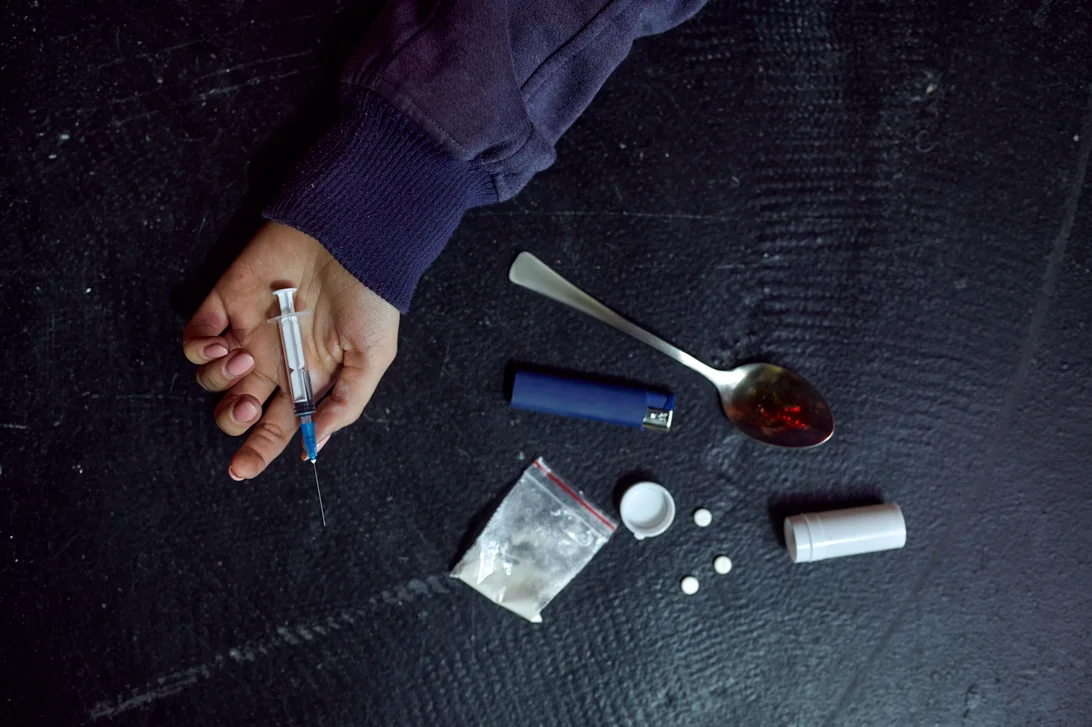
Every criminal court judge sees the end of a human story unfold in the courtroom.
People enter the courtroom only after a crime has been committed, an addiction has taken hold, relationships have been shattered, years have been lost, and sometimes, even a human life has been lost. There, the judge’s task is clear: to apply the law impartially, based on the evidence and their own inner conviction. And to mete out punishment.
Yet, over the years, I found myself increasingly asking a different question: why did this story begin, and was it possible to avoid such a tragic outcome? I have witnessed truly harrowing human fates—parents driven to tie their child to a radiator just to tear them away from a dealer; men who lost their self-respect and dignity, left without family or friends; and death itself.
It was from this question that the Varna Appellate Court’s initiative, "Children and Drugs: Truths and Myths," was born.
Drugs are a part of our lives. We know they are present around schools, in clubs, and at parties; that accessing them is terrifyingly easy; and that new substances are constantly emerging. We hear about yet another arrest, another child who has experimented, another young person using drugs. And it seems we have gradually grown accustomed to this—to the point where it is easier to score a dose than to order a pizza.
We have developed a tolerance for their very presence. Not because we necessarily approve of them, but because we have come to accept them as an inevitable part of the world we live in. We increasingly rarely ask ourselves why this is the case or whether it truly has to be so. Sometimes, we even uncritically perpetuate one of the most dangerous myths—that there are "dangerous" and "harmless" drugs, that there is a distinction between addiction and "mere experimentation," and that drugs can simply be part of having fun.
We must not get used to it.
We should not accept it as normal for our children to grow up in an environment where drugs are just another option likely to be offered to them someday. Nor do I think we should resign ourselves to the belief that nothing is within our control.
But change will not come through fear and moralizing. Children do not need another lecture where adults tell them how to live. They need an honest conversation. They need knowledge that allows them to distinguish truth from myth. They need the opportunity to ask questions and receive answers that do not underestimate their ability to think and choose for themselves.
That is precisely why, from the very beginning, it was important to me not to enter the classroom alone.
I can recount what I see as a criminal court judge. I know drugs through the cases I handle—through the crimes, the punishments, the shattered families, and the ruined lives. But there is something I cannot—and should not—speak about from personal experience: what it is like to be an addict.
That is why Mitko joins me at these meetings.
He understands addiction not from books, statistics, or court files, but from his own life. And he has managed to break free from it. When we stand before the children together, they hear the same messages but from two very different perspectives. I can tell them how drugs end up in the courtroom. Mitko can tell them how, long before that, it enters a person’s life—sometimes almost imperceptibly—through curiosity, peer groups, the desire to fit in, or the conviction that "it won't happen to me."
Mitko is not merely an illustration of the judge's words; he is an equal participant in the conversation.
His strength lies in the authenticity of his lived experience. It is far easier to believe in experience than in theory. Mitko does not tell the children what might happen; he tells them what did happen to him.
The children ask him things they would likely never ask me or a teacher. And he can answer them not with theory, but with his own story—describing how addiction gradually alters one's choices, relationships, values, freedom, and life itself.
But there is something else, too—something particularly important to me. Mitko doesn’t stand before them merely as someone who was once an addict; he stands before them as someone who has managed to reclaim his life.
These are the kinds of stories I want us to tell. Not stories that point a finger and say, "Look where you could end up," but stories that reveal the high price involved—and, at the same time, the immense power of human choice. Because no one should be defined forever by the hardest period of their life.
Over time, I’ve come to realize that this specific dynamic works: the judge, who knows the consequences, and the man who knows the path leading to them—and the way back. We talk a lot. We share stories, explain things, and sometimes argue. The kids ask questions—sometimes directly, sometimes provocatively, and sometimes about things adults prefer not to discuss. And that is precisely when the encounter becomes meaningful. Because this isn’t a lecture on drugs; it is a genuine conversation about choices and their consequences.
I don’t know what stays with each child after such a meeting. Nor would I presume to claim that a single conversation can shield them from every future risk. But I have seen how they listen. How they ask questions. How they debate. How, sometimes, they linger after the session ends because there is something more they want to say or ask.
We adults owe a debt to our children. They are growing up in a world whose rules they did not write and whose dangers they did not create. We are handing them this world just as we have shaped it and allowed it to become. That is why we cannot simply expect them to learn on their own how to survive in it.
We owe them knowledge. Not knowledge of an ideal world where drugs do not exist, but knowledge of the real one—knowledge that will help them survive within it: to recognize risk, to look past the myths, to understand that drugs always come at a cost—a cost that varies depending on the choices one makes, but a cost that is always paid—and to make the right choices even when we are not by their side.
For there are no protected children. There are no immune families. Education, a good family, intelligence, love, and care can provide support, but they do not offer absolute protection. The thought that "this won't happen to my child" is perhaps one of the most dangerous myths we adults tell ourselves.
And that is why I keep going.
We cannot eliminate drugs from the world where our children are growing up. We cannot be by their side at every moment. We cannot make the choice for them. But we can prepare them for the moment of choice.
We can provide knowledge. We can shatter at least one myth. We can share a real human story, a question, or a single sentence that offers support exactly when it is needed most.
To me, this is the essence of prevention: not promising that no one will ever make a mistake, but increasing the likelihood that a young person, when faced with a choice, will make it in an informed and conscious way.
Today, I hope that the journey begun with "Children and Drugs: Truths and Myths" will continue and reach even more children and young people through the Association of Women Judges in Bulgaria’s initiative: "No Myths... I Chose Myself!"
I hope we can find other judges willing to step out of the courtroom and talk to young people. I hope we can find others like Mitko—people who have overcome addiction, reclaimed their lives, and are ready to share their experiences honestly and responsibly. I hope we can engage teachers, parents, professionals, and organizations who believe that prevention is a shared cause.
If you believe in this, join us.
Because drugs have become part of our lives, yet we are not obliged to accept their presence unquestioningly. Changing this societal mindset will not happen on its own. It depends on all of us. As judges, we usually encounter a person at the end of their story.
With this initiative, I would like us to be there much sooner—when the story can still be written differently.
And when the moment of choice arrives, for a child to have more reasons to say: "I choose myself."
Svetoslava Koleva
Judge at the Varna Court of Appeal
Member of the Management Board of BAWJ