Article
Becoming a Judge Before the Age of 30: The Path to Success, Difficulties, and Challenges
14 September 2026
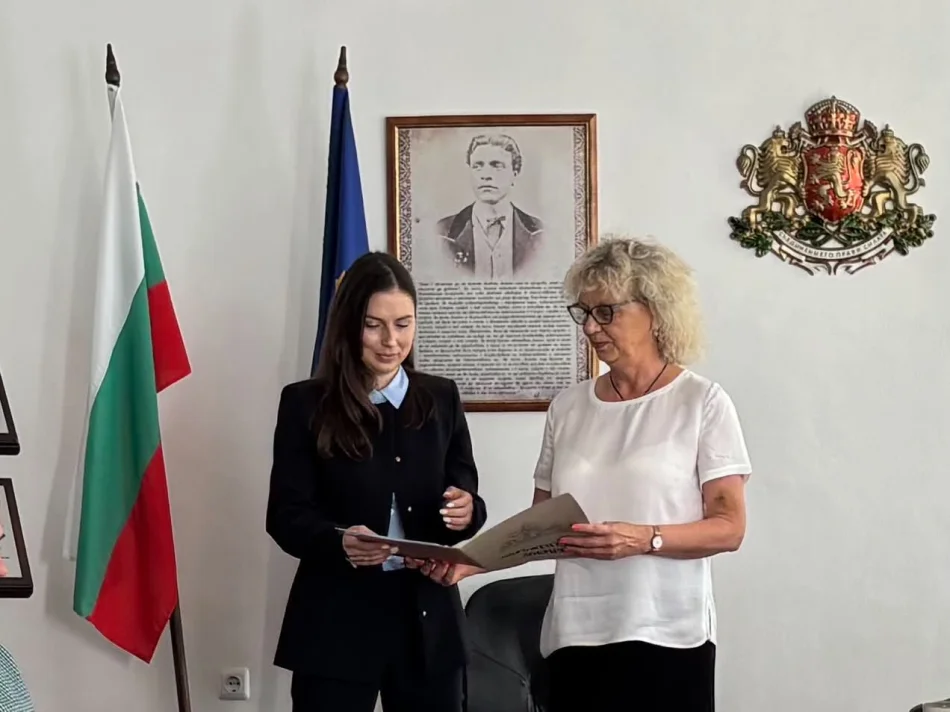
Author: Veselina Gospodinova, Junior Judge at the Dobrich Regional Court
When people hear the word "judge," the image that usually comes to mind is that of a person with decades of life and professional experience. However, donning the black robe before the age of thirty is not merely an exception; it is a journey marked by sleepless nights, sacrifices, immense discipline, and, above all, an unwavering belief in justice. For me, this profession has never been just a career goal. It is a calling.
My path to the judiciary began in the academic environment of Varna Free University "Chernorizets Hrabar," from which I graduated with honors in 2020. Yet, graduation was only the first step in a long marathon. There followed the mandatory six-month internship—a transitional period moving from pure theory to a real-world encounter with the law—before I obtained my full legal qualification. It was then that I realized laws are not merely texts in legal codes, but people's lives.
The real work, however, began when I won the competition for the position of judicial assistant in the criminal division of the Varna Regional Court. I spent nearly four years at the heart of criminal proceedings. Working there was an invaluable training ground. It taught me how to analyze evidence, draft precise judicial acts, and—most importantly—resolve complex legal cases. Alongside my daily court duties, I sat for national competitions for junior judges every year—competitions requiring not merely preparation, but total dedication. For years, I was just a step away from my goal—a test of willpower that could easily break any young person. Yet, instead of giving up, every unfilled position only fueled my determination to study more, refine the details, and believe that my moment would come.
And then came 2025. My successful qualification opened the doors to the National Institute of Justice (NIJ) in Sofia. Nine months of mandatory initial training followed. The NIJ is not merely a continuation of university studies; it is a place where practicing Bulgarian magistrates teach you how to think like a judge, how to conduct court hearings, and how to uphold your independence. The training was intensive—a round-the-clock process filled with resolving real-life cases, participating in mock trials, and taking exams that tested our knowledge.
Today, having officially assumed office as a junior judge at the Dobrich District Court, I reflect on my journey. I managed to achieve my dream before turning thirty. Yet, the moment I donned the judicial robe, personal pride and the joy of success instantly gave way to a different, far more powerful feeling: a profound sense of responsibility.
Being a young judge does not mean being granted any leniency regarding society's expectations. On the contrary—the responsibility of fairly resolving a dispute between individuals or determining someone’s fate in criminal proceedings weighs heavily from day one. In our profession, youth is not a disadvantage; it is an asset when combined with drive, uncompromising integrity, and a commitment to continuous learning.
For me, professional development does not end in the courtroom. I believe a judge must be an engaged citizen and part of a community that is actively shaping the future of the justice system. That is precisely why it was a tremendous honor for me to be among the founding members of the recently established Association of Women Judges in Bulgaria (AWJB). This organization unites colleagues from across the country with the aim of upholding judicial independence, high ethical standards, and equality in the administration of justice. Being part of building this community at the very beginning of my career as a magistrate gives me added confidence that the voice of the younger generation and mutual support among colleagues are key to a strong and fair justice system.