
Интервю17 ноември 2026 г.
From Bench to Bedtime Story: Reflections of a Judge in Taiwan
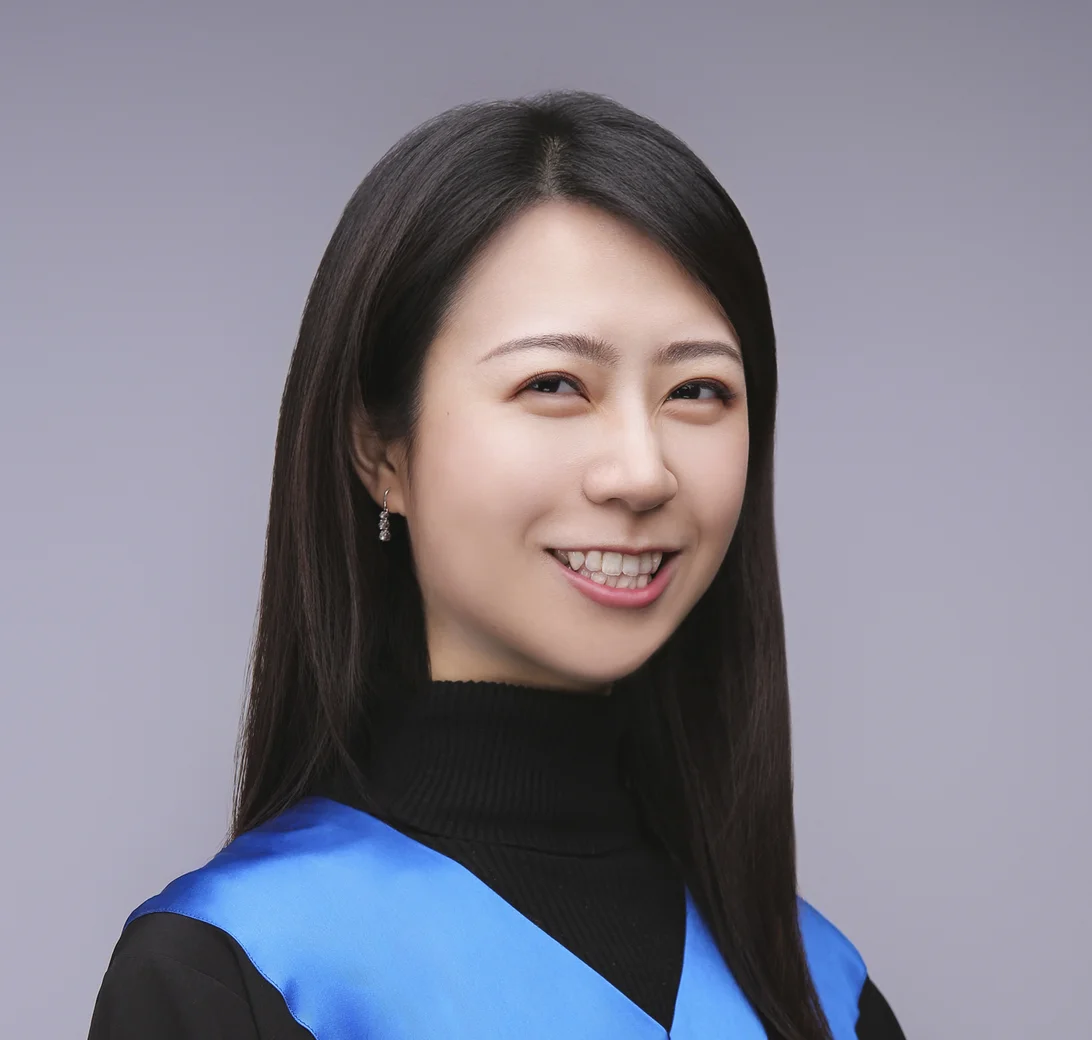
Joy (Wen-Ju) Wu
Judge, Taiwan High Court
Taiwan
Becoming a Judge in Taiwan
My journey as a judge began relatively early in life. I studied law at National Taipei University and later received my master’s degree from National Taiwan University. After passing Taiwan’s National Judicial Examination in 2014, I completed two years of professional judicial training before beginning my first judicial assignment in Kinmen in 2016.
This reflects a distinctive feature of Taiwan’s civil law system. Unlike in many common law jurisdictions, where judges are often appointed after many years of legal practice, judges in Taiwan may enter the judiciary at a relatively young age after passing a highly competitive national examination and completing professional training.
For many of us, becoming a judge therefore coincides with other important stages of life. In my own case, my early years on the bench were also the years in which I became a mother. These two journeys have shaped each other in ways I could never have anticipated.
From Bench to Bedtime Story
My first judicial assignment took me to Kinmen, a small offshore island of Taiwan. I served there for three years, and during that period, I gave birth to my two children.
Because my children were cared for by family in Taiwan, my life was divided between the courtroom and home, quite literally on two sides of the sea. Every Monday, I took the first flight to Kinmen. Every Friday, I took the last flight back to Taiwan. During the week, I expressed and froze breast milk, carrying it home at the end of the week like what mothers often call “liquid gold.”
For three years, this became the rhythm of my life: law during the week, flights at either end, and bedtime stories whenever I could make it home.
That experience taught me something that has stayed with me throughout my career: the institutions in which judges work inevitably affect the human beings who administer justice. Judicial systems need independence, professionalism and efficiency, but they also need structures that allow judges to remain whole human beings.
This is why I have come to believe in greater flexibility for judges serving far from their families, more humane transfer arrangements for judges with young children or other caregiving responsibilities, and appropriate support for families separated by remote judicial assignments.
Equality in Real Life
After three years in Kinmen, I returned to Taipei. Only a few months later, my marriage ended, and I became a single mother.
My children were still very young. Some mornings they cried when I left them at preschool, while I watched the clock because a courtroom full of people was waiting for me. I had scheduled those hearings myself. I remember thinking: if I could not arrive on time, how could I ask litigants to respect the courtroom and the judicial process?
Eventually, I asked my Presiding Judge whether I could begin my hearings just fifteen minutes later.
Those fifteen minutes made an enormous difference.
They gave me enough time to be present at the school gate and still fulfil my responsibilities on the bench. I came to realise that fairness does not always mean treating every person in exactly the same way. Sometimes a small degree of flexibility allows people in different circumstances to meet the same professional expectations.
I encountered a similar issue when I applied for judicial housing. The system used a point-based formula based partly on family size. As a single parent, I had one fewer adult in my household and therefore one fewer point, even though I also had one fewer person with whom to share childcare and commuting responsibilities. I raised this concern with the administration, and I was glad that the system began moving toward reform.
These experiences taught me that equality on paper and equality in real life are not always the same thing. Recognising different circumstances is not necessarily about giving one group more. Sometimes it is simply about enabling people in different situations to meet the same professional standards.
My experiences have made me think about how judicial institutions should adapt to the people who work within them. But adaptation is not only about working conditions. The nature of judicial work itself is also changing, particularly as technology and artificial intelligence become increasingly integrated into the courts.
Artificial Intelligence and the Human Judge
I have previously written about the use and possible future development of artificial intelligence in Taiwan’s judicial practice. Taiwan has explored tools including speech recognition in courtrooms, AI-assisted sentencing information systems and intelligent analysis of electronic case files.
These technologies have considerable potential to reduce the time judges and court staff spend on repetitive and information-intensive tasks. For me, however, the more important question is: where should we draw the line?
I do not see AI as a substitute for judges. Its greatest value lies in assisting with repetitive, labour-intensive work or processing large amounts of information, allowing judges to devote more attention to the core responsibilities of judging.
Those core responsibilities must remain with the human judge.
AI may identify inconsistencies between statements, but it cannot necessarily understand why a witness has given different accounts. The reason may be dishonesty, but it may also be imperfect memory, a slip of the tongue or a misunderstanding of the question. AI may likewise identify patterns in documents or records, yet the legal significance of those facts still requires judicial judgment.
This is why one principle I consider especially important is human-in-the-loop.
Human beings and machines are both capable of error. AI may help a judge identify something that has been missed. But when AI produces an inaccurate or inappropriate result, the judge must be able to recognise it, question it and correct it. Technology should support judicial decision-making without displacing judicial responsibility.
Looking ahead, judges will need to know not only how to use technology, but also how to question it and recognise its limitations. As AI becomes better at processing information, distinctly human judicial qualities may become even more important: independence of mind, responsibility, an understanding of human behaviour, and the ability to see the person behind the case.
Ultimately, every judge must still ask questions that technology cannot answer by itself:
What is fair in these particular circumstances? What does this evidence truly mean? What consequences will this decision have for the people before us? And can I take responsibility for the decision I am about to make?
For me, that last question is fundamental.
Technology may change how we judge. It should not change who is responsible for judging.
What My Journey Has Taught Me
Looking back, I have learned that being a good judge does not require us to become less complete human beings. Our experiences as parents, caregivers and members of society need not diminish our professionalism. They can deepen our understanding of fairness, responsibility and human dignity.
This is perhaps the thought I would most like to share with judicial colleagues around the world.
Although our legal systems and professional traditions may differ, many of the challenges we face are remarkably similar. We make decisions that affect other people’s lives while living complicated human lives of our own. Judicial institutions therefore need to protect independence and professional excellence while also recognising the people behind the robes.
At the same time, as technology becomes increasingly integrated into our work, we must ensure that efficiency never replaces judgment and that technological assistance never displaces human responsibility.
At the end of my presentation on women in the judiciary, I expressed my hope in three simple phrases. They still capture what I continue to strive for:
Law at work.
Love at home.
Peace at heart.
Short Biography
Joy (Wen-Ju) Wu is a Judge of the Taiwan High Court. She began her judicial career in Kinmen in 2016 and later served as a criminal judge in Taipei. She holds a master’s degree in law from National Taiwan University. Her professional interests include criminal justice, the Citizen Judge System, judicial technology and artificial intelligence. She is a member of the Taiwan Chapter of the International Association of Women Judges and has written on the application of artificial intelligence in Taiwan’s judicial system.
Name and judicial position | Joy (Wen-Ju) Wu, Judge |
Country | Taiwan |
Court / Jurisdiction | Taiwan High Court |
Years in the judiciary | 10 years |